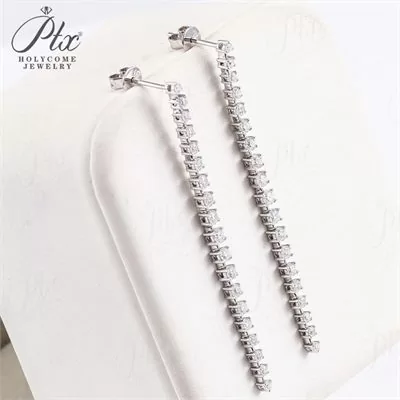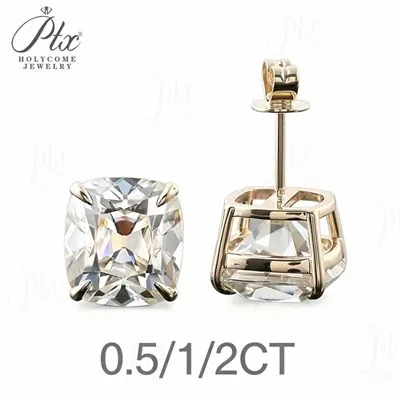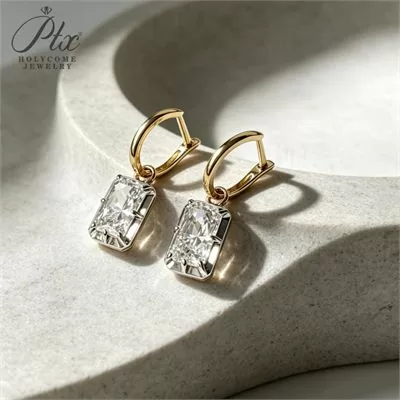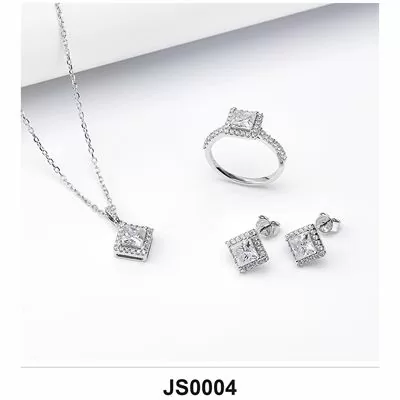
Earrings
Earrings Nickel, Lead and Hallmark: The Buyer's Checklis for US Boutiques - HOLYCOME
For Earrings wholesale, compliance means three things at once: nickel and lead release inside the US and EU limits, a stamp and assay trail your retail buyer ca
For Earrings wholesale, compliance means three things at once: nickel and lead release inside the US and EU limits, a stamp and assay trail your retail buyer can defend, and a stone certificate that matches the piece in the tray. Buyers who treat compliance as paperwork after the run are the ones who get stopped at customs, or returned by a chain store.
The three compliance gates for Earrings
The first gate is the alloy. For Earrings in 925 sterling silver, nickel release must sit below 0.5 microgram per square centimetre per week; in plated pieces the barrier between the base alloy and the skin must survive daily wear. The second gate is the stone: a moissanite Earrings needs a GRA-equivalent report, a lab-grown diamond Earrings needs IGI or GIA, and the report number must match the laser on the stone.
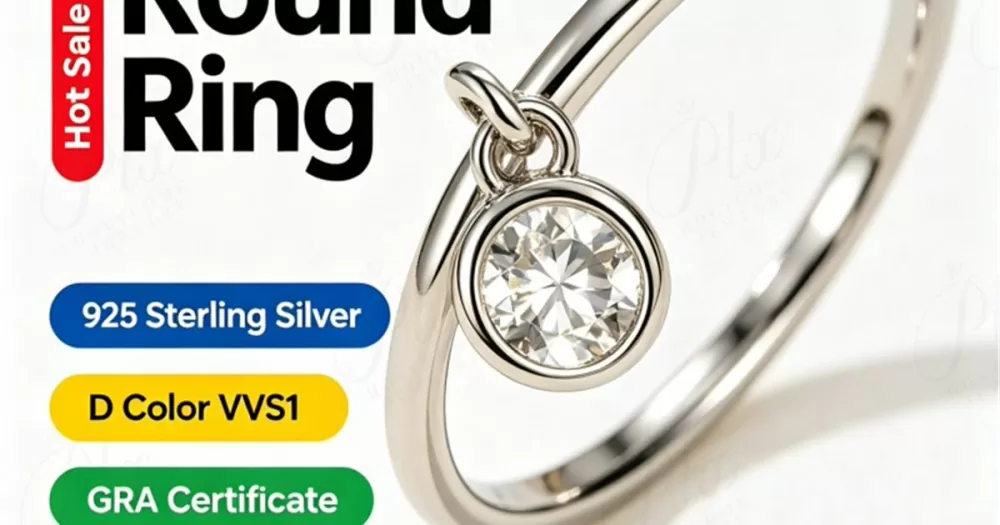
The third gate is the paper trail. Each Earrings carton carries the invoice declaration, the assay stamp and the stone report; customs or a chain-store buyer should be able to match the piece, the stamp and the report without a phone call. If a supplier cannot produce these three gates before bulk, the price of the Earrings is irrelevant.
Re-testing a Earrings run is not about paperwork; it is about catching an alloy change before it reaches a retail store. A factory that swaps a supplier to save three percent on silver cost will quietly reuse your existing test certificate unless you require a fresh sample each lot.
The compliance checklist for Earrings
Run the checklist in order. First, ask for the nickel and lead test on the exact alloy used for this Earrings, not a generic report from a different line. Second, ask for the assay reading on the stamp: 925 silver, 10K or 14K gold, measured weight and fineness. Third, ask for the stone report and verify the number online.
Fourth, confirm the plating thickness on the Earrings — a thin 0.03 micron plating tarnishes in weeks, while a proper rhodium or palladium flash runs 0.20 micron. Fifth, check the country of origin statement on the commercial invoice. Sixth, ask how often the alloy lot is re-tested when the supplier changes. Seventh, keep the approved first article for six months after every Earrings run.
The stone report on a Earrings piece should match the laser on the stone, not just the box. Ask the supplier to photograph the stone with the report number beside it; this single step stops the common practice of shipping lower-grade stones under a better certificate.
Certification scorecard for Earrings
Use this scorecard on every Earrings supplier. Mark Pass, Verify or Reject. Three Rejects means walk away, no matter the piece price.
| What to ask | Pass | Verify | Reject |
|---|---|---|---|
| Nickel release report | Third-party, this alloy | Lab report + assay | Generic or different alloy |
| Stamp and assay | 925/10K/14K, measured | Assay on request | Stamp only, no assay |
| Stone certificate | GRA/IGI/GIA, verifiable | Laser matches report | No number online |
| Plating thickness | 0.20 micron flash | Written quote | No plating line |
Plating thickness is the most under-inspected compliance item on Earrings. A 0.03 micron flash looks perfect at sample approval and tarnishes in six weeks. A 0.20 micron rhodium or palladium flash costs cents more per piece and survives the retail shelf.
Red flags in Earrings compliance
Four red flags. First, a supplier who offers the compliance report after you order, not before. Second, a report that lists a different alloy, a different factory or a different piece than the Earrings on the quote. Third, a stone report with no verifiable number online. Fourth, a refusal to show the plating bath thickness in writing.
If any of these appears on a Earrings quote, assume the price is hiding the re-test cost. Move the compliance line into the quote, in writing, before you commit a deposit.
Country of origin on a Earrings invoice must match where the piece was actually finished. If the casting happened in one country and setting in another, say so; US customs and EU buyers increasingly audit the finishing country, not the raw material source.
What compliance adds to the Earrings price
Real numbers. A nickel and lead third-party test runs USD 80 to USD 150 per alloy, amortised over a 500-piece Earrings run. A GRA stone report runs USD 3 to USD 6 per stone. A 0.20 micron rhodium flash adds roughly USD 0.5 to USD 1.2 per piece versus a 0.03 micron flash.
Across a 300-piece Earrings order, a fully compliant piece costs USD 2 to USD 4 more than a bare one. The return rate from a tarnished or mis-stamped piece, once a retail buyer notices, is the whole order.
Keep the compliance file per Earrings design, not per order. When you reorder six months later, the alloy and stone reports carry over only if the bath and stone lot have not changed. A two-page file per design saves days on a repeat inspection.
Scaling compliance from 50 to 500 Earrings pieces
At 50 Earrings pieces, compliance is a sample check. At 500, it is a system: a fresh alloy sample per lot, a stone report per colour, and a QC bench that logs prong and stamp readings. The marginal cost of compliance per Earrings piece actually falls as the run grows.
Buyers who scale Earrings without scaling compliance discover the issue at the retail chain audit. That conversation costs more than the compliance line would have across the entire year of orders.
Picture a US boutique buyer who opens a 300-piece Earrings tray. The first thing they check is the stamp on a random piece, then the stone report on a random stone, then the plating under a loop. If all three pass, they reorder. If any one fails, the whole tray goes back and the buyer moves to the next factory. Compliance on Earrings is the difference between a one-time order and a standing line.
Your Earrings checklist
- Confirm the nickel and lead report is on the exact alloy used for this Earrings run.
- Verify the stone report number online before approving the Earrings sample.
- Read the assay value on the stamp: 925, 10K or 14K.
- Ask for the plating thickness in writing on the Earrings quote.
- Match the country-of-origin line on the invoice to the goods.
- Keep the approved first article for six months after each Earrings batch.
- Re-test when the alloy, plating bath or stone lot changes.

Frequently Asked Questions
Which compliance certificates should a Earrings supplier provide?
Ask for a third-party nickel and lead report covering the actual alloy used on Earrings, a stamped hallmark (925, 10K, 14K) verified by assay, and a stone report (GRA for moissanite, IGI or GIA for lab-grown diamond). In-house lab reports are useful for production control, but chain-store buyers will ask for the third-party one. Send us the Earrings design and metal, and we return the compliance file before bulk.
Is nickel-free the same as hypoallergenic?
No. Nickel-free on Earrings means nickel release below 0.5 microgram per square centimetre per week under EN 1811; hypoallergenic is a marketing claim with no legal definition. Use the nickel-release number on your Earrings listing, not the word. Send us the Earrings design and metal, and we return the compliance file before bulk.
Who pays if US customs holds a Earrings shipment?
Whoever misdeclared it. If the alloy, stone treatment or country of origin on the Earrings invoice does not match the goods, the importer pays storage, re-testing and possibly destruction. Build the customs file before the bulk run, not after the vessel docks. Send us the Earrings design and metal, and we return the compliance file before bulk.
Does GRA certification add cost to Earrings?
A GRA or equivalent stone report costs a few US dollars per stone and is included in most moissanite Earrings quotes. What you pay extra for is the matching physical laser inscription and a report number that can be verified online. Send us the Earrings design and metal, and we return the compliance file before bulk.
How often should we re-test a Earrings batch?
First article, pre-production, and final bulk. If the alloy, supplier or plating bath changes, treat it as a new product and re-run the nickel and lead tests before stocking Earrings in a retail store. Send us the Earrings design and metal, and we return the compliance file before bulk.
Compliance on Earrings is not a cost centre; it is the reason a retail buyer reorders. A piece that arrives with a wrong stamp, a thin plate or an unverifiable stone certificate costs the buyer more than the piece itself.
Related Reading
Next Step
Send us the Earrings design, the metal and the stone type, and we return the nickel and lead report, the assay reading and the stone certificate for approval before bulk. The compliance line is itemised on the quote, in writing.
HOLYCOME, the export brand of Wuzhou HengliLai Jewelry Co., Ltd., has made moissanite and sterling silver jewelry in Wuzhou, Guangxi since 2009, at roughly 60,000 pieces a month. Every Earrings run leaves the bench with the assay, the stone report and the nickel release reading attached to the batch file. Reach the trade desk at service@holycome.com or WhatsApp +86 18078079070.
Since 2009, HOLYCOME has run the compliance file for every Earrings order leaving our Wuzhou bench: assay, stone report, nickel reading, and a photo of the approved first article. That file is why US boutiques and Amazon private-label sellers reorder Earrings with us instead of negotiating it from scratch every season. Ask for the file with your sample.
The compliance bar for Earrings wholesale is simple in principle but strict in practice: third-party nickel and lead on the actual alloy, an assay-verified stamp, a verifiable stone certificate, and a written plating thickness. Get those four on the quote before deposit, and your Earrings order arrives sellable, not held.
Send us your Earrings design and the target metal. We return the compliance file, the assay reading and the stone certificate for approval before bulk, with MOQ 50 per design and sample in three to five days.