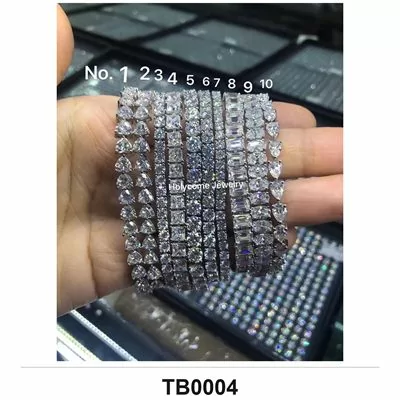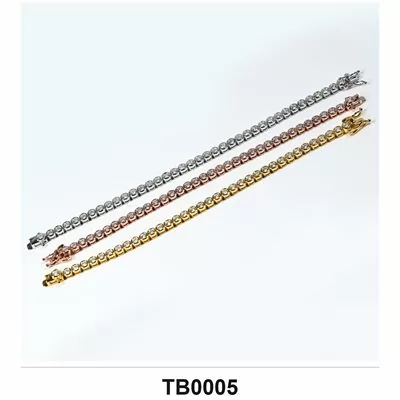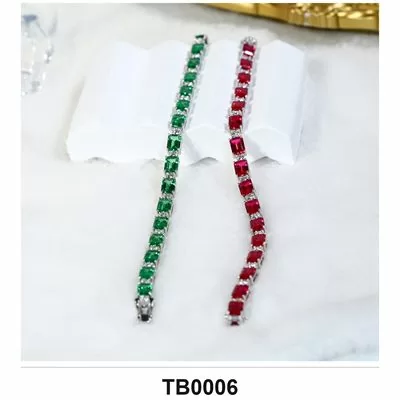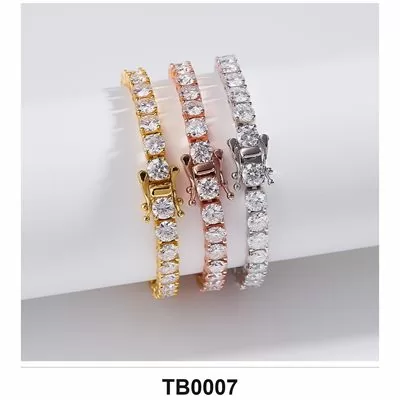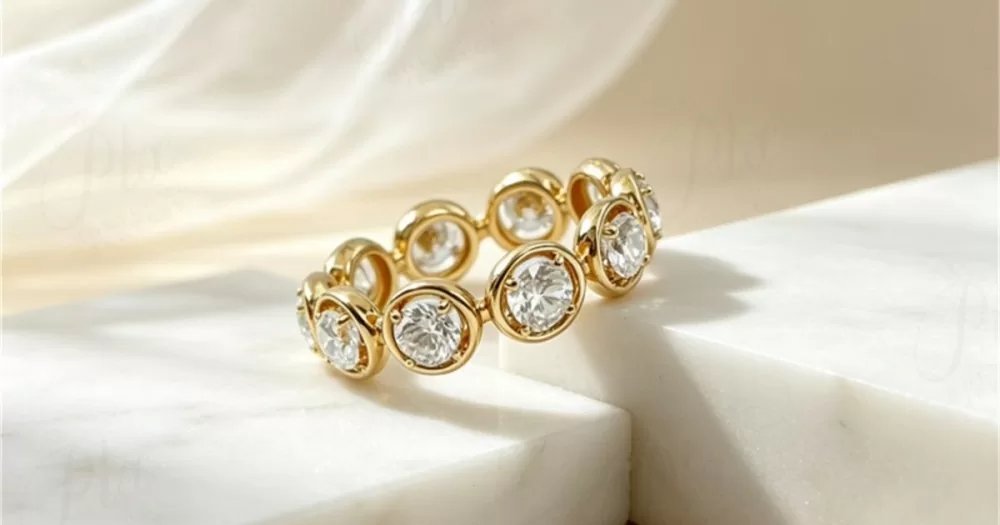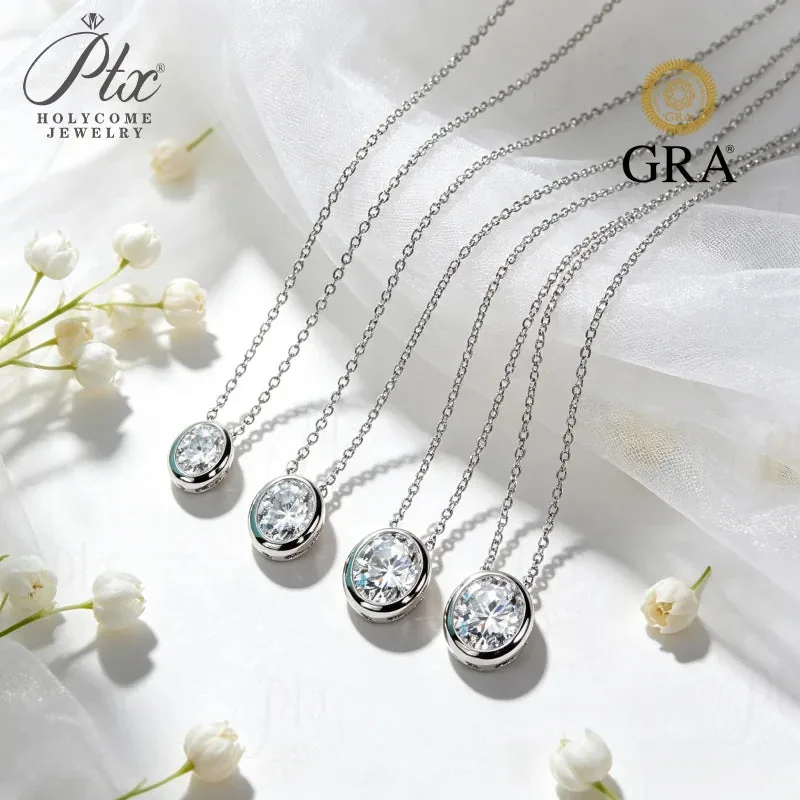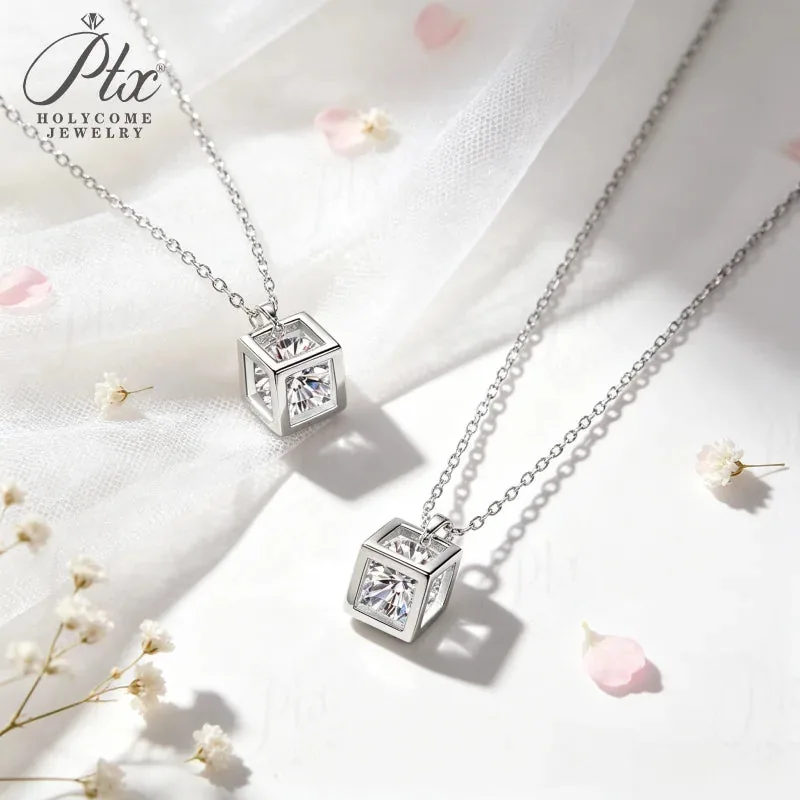
Lab Grown Padparadscha Sapphire Rings
Lab Grown Padparadscha Sapphire Rings Trade Show Sample: MOQ, Mixed Designs and the R - HOLYCOME
Lab Grown Padparadscha Sapphire Rings: tolerances, cost structure and the reject rule for US wholesale buyers.
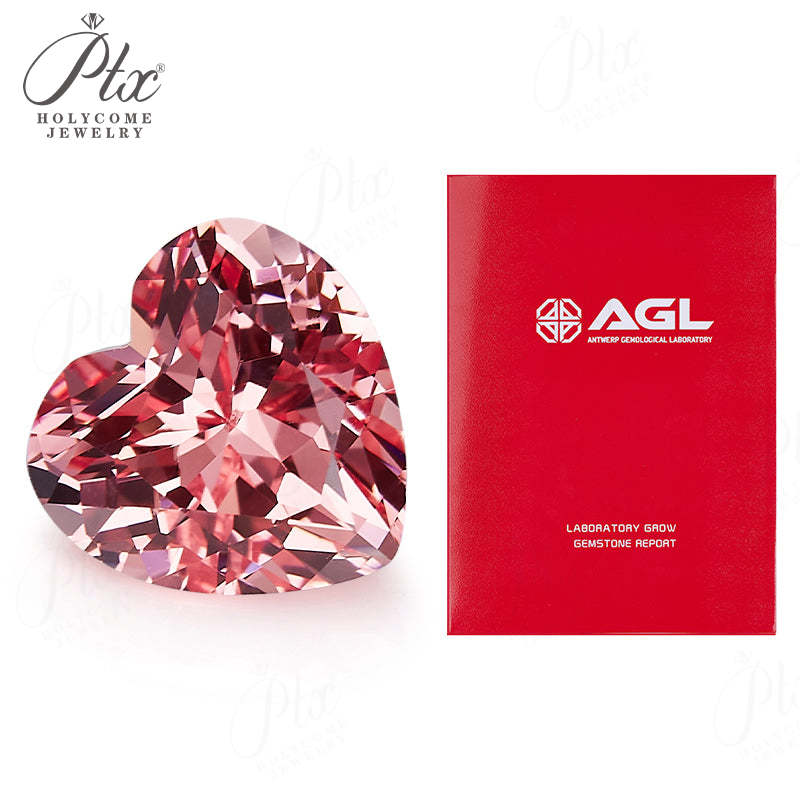
Trade Show Sampling for lab Grown Padparadscha Sapphire Rings
A trade show converts on the sample that leaves the booth, not on the catalogue that gets left behind. The sample card has to carry the model number, the metal, the stone size, the FOB price and the MOQ, or the follow-up email starts from zero, which the Trade Show Sample file records at USD 132-1078 in display tray with sample card.
Ten to twelve pieces on a tray is the useful number for lab Grown Padparadscha Sapphire Rings. More than that and the buyer photographs instead of touching, and a photograph is not an order, shipped as display tray with sample card and certified GRA report.
The follow-up window is seven days. After that the card sits in a stack. We write the quote the same week and put the sample in the post so the buyer has the piece on the desk when the price arrives, which the Trade Show Sample file records at USD 132-1078 in display tray with sample card.
MOQ, Mixed Designs and the Real First Order
The brief was simple: 100 lab Grown Padparadscha Sapphire Rings, 14K/18K gold or platinum with IGI-certified lab-grown diamond, delivered before January. The run that arrived carried 17 pieces with certificate mismatch, and the buyer spent USD 50-260 on sorting before the goods reached a shelf, which is USD 132-1078 on the Trade Show Sample schedule.
On a 100-piece order at USD 132-1078, a certificate mismatch rate above two percent is not a quality surprise. It is a costing error that shows up as a credit note three weeks later.
Nothing in the rebuild was expensive. A gauge, a written limit and a retained tray did the work that a discount would only have delayed, priced at USD 132-1078 for the 100-piece Trade Show Sample run.
What US buyers Check Before They Sign
At USD 132-1078 per piece the four measurements below are worth more than the discount being negotiated. One of them costs nothing to write down.
| Spec point | Common trade output | HOLYCOME standard | Cost if missed |
|---|---|---|---|
| Stone colour consistency | Graded by eye under D65 | Colour matched to a retained master stone, per tray | Repeat colour complaint in the same SKU |
| Sizing drift across the run | Not measured | Go/no-go gauge on every size, drift held under 0.15 mm | Resize queue and reship cost |
| Clasp spring life | Sampled by hand | Cycled 500 times on a jig per lot | Detach claim and brand damage |
| Prong tension and seat depth | Checked by feel at the bench | Pull-tested per piece, seat depth written on the sheet | Stone loss and total replacement |
Write these into the Trade Show Sample purchase order and the arrival check becomes arithmetic instead of recollection, which is how the Trade Show Sample account reads it at USD 132-1078.
Where USD 132-1078 Per Piece Actually Goes
Cost at USD 132-1078 leaves no room for assumption. The table shows which line compresses and which line only moves quality down.
| Cost line | Share | What moves it |
|---|---|---|
| Base metal or alloy for lab Grown Padparadscha Sapphire Rings | 30% | Alloy choice and casting yield |
| Stone or melee for lab Grown Padparadscha Sapphire Rings | 20% | Sieve range and lot batching |
| Setting and finishing labor for lab Grown Padparadscha Sapphire Rings | 19% | Jig design and bench minutes |
| Plating, polish and QC for lab Grown Padparadscha Sapphire Rings | 12% | Per-tray versus per-piece checks |
| Packaging for lab Grown Padparadscha Sapphire Rings | 19% | display tray with sample card |
A factory that cannot state its bench minutes per piece has never costed its own line. Ask for minutes and for the reject rule, not for a discount, which the Trade Show Sample file records at USD 132-1078 in display tray with sample card.
MOQ, Mixed Designs and the Real First Order
It is not a marketing point on lab Grown Padparadscha Sapphire Rings. It is the number that decides whether the second order happens, the figure being USD 132-1078 for a 100-piece run.
The commercial version of this question for lab Grown Padparadscha Sapphire Rings is simple: what does a failure cost the buyer, and who pays it. In our terms the answer is a replacement inside the same order cycle, with the retained reference tray as the arbiter, shipped as display tray with sample card and certified GRA report.
That clause matters more than a discount on lab Grown Padparadscha Sapphire Rings. A 4% lower unit price disappears on the first rejected tray; a written responsibility clause does not, shipped as display tray with sample card and certified GRA report.
Sample to Container: The Real Calendar
Buyers who have run three programs on lab Grown Padparadscha Sapphire Rings know this instinctively; first-time buyers learn it the expensive way, and the Trade Show Sample quote for it sits at USD 132-1078.
What buyers underestimate on lab Grown Padparadscha Sapphire Rings is the cost of the interruption, not the cost of the piece. A missing 6% of a run stalls a launch, and a stalled launch costs more than the 6% ever did, the figure being USD 132-1078 for a 100-piece run.
We plan a 3-5% buffer on first runs of lab Grown Padparadscha Sapphire Rings and tell the buyer it exists. Hiding a buffer and shipping it as production is how a supplier trains a buyer to distrust the count, which is USD 132-1078 on the Trade Show Sample schedule.
Order Terms, Sample Timing and Packing
The commercial frame is short enough to state in full. Minimum order is 50 pieces per design, and mixed designs travel in one shipment, so a 100-piece Trade Show Sample order can carry three or four models without a separate setup charge. Sample pieces leave in 3-5 days when the components are in stock, and a new model adds about twenty days before the first article exists, with GRA report and display tray with sample card stated on the same sheet.
Payment is 30 percent with the order and 70 percent against the bill of lading, with the balance window stated on the invoice rather than agreed by message. Prices quoted at USD 132-1078 are FOB Guangzhou or Shenzhen; DDP is quoted separately because the duty line moves with the tariff schedule and not with our cost.
Packing follows the display tray with sample card format at 100 pieces to the carton, and the packing list carries SKU, size and stone size so receiving can count without opening every box. Private-label cartons add three days for the print run and must be approved before the first bulk order, not after it, certified GRA report and packed display tray with sample card at 100 pieces.
Certification is GRA report for the lots that carry it, with a batch report and per-piece measurement of report plot match for the lots below the threshold. The document set travels with the shipping papers, which is what a customs broker asks for at the port rather than after clearance, which the Trade Show Sample file records at USD 132-1078 in display tray with sample card.
A rejected tray is settled inside the same order cycle against the retained reference piece. If the difference sits on our retained sample we replace or credit; if it appeared in transit we split the assay cost and file with the carrier, and that rule is written on the order before the deposit clears, which is USD 132-1078 on the Trade Show Sample schedule.
The Three Failures We See Most in Incoming Samples
growth-method disclosure
CVD and HPHT stones behave differently under high heat during setting. Disclosing the method protects both sides in a repair claim, which the Trade Show Sample file records at USD 132-1078 in display tray with sample card.
The commercial effect is stone replacement at a four-figure cost, plus a disclosure review. Buyers who have seen it once put it in the purchase order; buyers who have not usually discover it on the first return, shipped as display tray with sample card and certified GRA report.
table percentage variance
A 62% table in a bright cut reads dark in a store window. Buying by table percentage, not only by carat, keeps the display consistent, shipped as display tray with sample card and certified GRA report.
Our countermeasure is a gauge and a written limit. It adds about 26 seconds per piece and removes the defect from the run rather than from the carton, quoted at USD 132-1078 per piece in display tray with sample card.
certificate mismatch
A stone whose report says VS1 but whose plot shows a cloud near the table reads as a grade dispute at the counter. Match the plot, not only the grade line, on a 100-piece Trade Show Sample order at USD 132-1078.
In a 100-piece run this typically shows on 11 of pieces. Catching it means measuring report plot match at the tray level, not inspecting the finished carton, and at USD 132-1078 for 100 pieces that is the number the buyer signs.
What This Means for a First Order
A first Trade Show Sample order of 50 pieces per design at USD 132-1078 tests the line rather than the range. Three designs covers the shelf.
Ask for the retained tray and the GRA report batch sheet with the first shipment. Both are free and both decide the reorder, on a 100-piece Trade Show Sample order at USD 132-1078.
How a Repeat Order Gets Built
Nothing in this sequence is unusual, and that is the point. Each step exists because skipping it produced a specific failure on a previous order, quoted at USD 132-1078 per piece in display tray with sample card.
- Lock the spec: metal, stone size range, plating thickness, sizing band and finish, all written on one sheet.
- Pull a stock-component sample in 3-5 days and measure it against that sheet, not against the photo.
- Approve the sample in writing, including the reject rule and the retained reference tray.
- Run bulk in 15-20 days for orders under 500 pieces, with the gauge check independent of the shift.
- Ship from Guangzhou or Shenzhen with the QC sheet in the carton and the batch report by email.
Reorders inside this sequence run 12-15 days because the model, the gauge set and the signed spec stay in our system, certified GRA report and packed display tray with sample card at 100 pieces, priced at USD 132-1078 for the 100-piece Trade Show Sample run.
Freight, Duty and the Arrival Check
Export runs through Guangzhou or Shenzhen. Air lands in 5-8 days on the US west coast, 7-10 on the east, and sea takes roughly three times the transit, the figure being USD 132-1078 for a 100-piece run.
FOB is the default on lab Grown Padparadscha Sapphire Rings and DDP is the option. Buyers new to US wholesale usually take DDP once, then switch after they see the breakdown, shipped as display tray with sample card and certified GRA report, certified GRA report and packed display tray with sample card at 100 pieces.
If certificate mismatch appears in the arrival check, the retained tray decides who owns it. Keep the GRA report batch sheet in the same folder as the packing list, priced at USD 132-1078 for the 100-piece Trade Show Sample run.
Frequently Asked Questions
How do you handle a rejected tray?
We replace or credit inside the same order cycle. The retained reference tray decides: if certificate mismatch shows on our retained piece we own it, and if it appeared in transit we split the assay cost and file with the carrier, which the Trade Show Sample file records at USD 132-1078 in display tray with sample card.
What are the payment terms?
30 percent deposit with the order, 70 percent against the bill of lading. For accounts on a second order we quote 30/70 with a 15-day balance window once the first shipment has cleared, with GRA report and display tray with sample card stated on the same sheet.
What is the minimum order for lab Grown Padparadscha Sapphire Rings?
50 pieces per lab Grown Padparadscha Sapphire Ring. Designs mix inside one shipment, so a first order of three designs at 50 pieces each is normal for a new US account. Below 50 the gauge check stops being independent of the shift, which the Trade Show Sample file records at USD 132-1078 in display tray with sample card.
Do you supply certificates for lab Grown Padparadscha Sapphire Rings?
GRA report on lab Grown Padparadscha Sapphire Rings above the threshold stated on the quote. Below it we supply a batch report plus per-piece measurement of report plot match, which is what a counter or a listing actually needs, shipped as display tray with sample card and certified GRA report.
How do you handle a rejected tray?
We replace or credit inside the same order cycle. The retained reference tray decides: if certificate mismatch shows on our retained piece we own it, and if it appeared in transit we split the assay cost and file with the carrier, which the Trade Show Sample file records at USD 132-1078 in display tray with sample card.
Next Step
The next step is a sample in 3-5 days, not a container. Write to service@holycome.com or WhatsApp +86 18078079070, subject Trade Show Sample, shipped as display tray with sample card and certified GRA report.
HOLYCOME is operated by Wuzhou HengliLai Jewelry Co., Ltd., a factory in Wuzhou, Guangxi, producing since 2009 at roughly 60,000 pieces a month. Contact service@holycome.com or WhatsApp +86 18078079070, and the Trade Show Sample quote for it sits at USD 132-1078.
Related reading: Lab Grown Padparadscha Sapphire Rings Q4 Holiday Stock: Sample to Container: The Real - HOLYCOME Lab Grown Padparadscha Sapphire 925 Sterling Silver Bridal Boutique: The Reject Tray - HOLYCOME